
What extraction removes that a vacuum never touches
Vacuuming removes what is loose. Extraction removes what has dissolved into the fiber, which is most of what you can smell.
September 3, 2026 · 2 min read · Interior
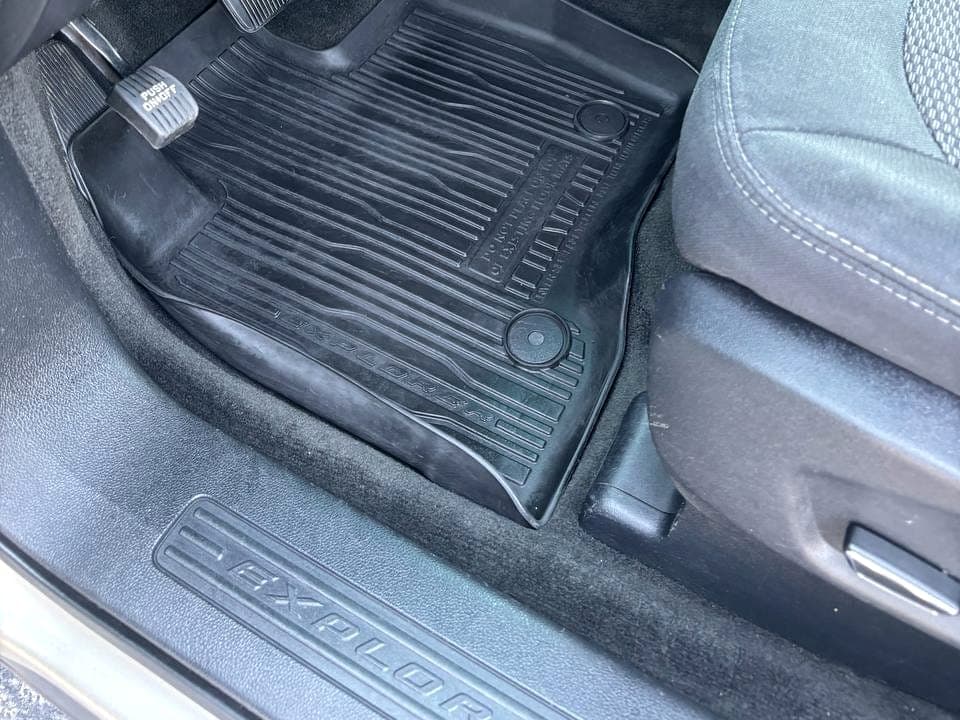
Two different problems
Car carpet holds two kinds of dirt. There is loose particulate, which is sand, grit, crumbs and fir needles sitting between the fibers. A vacuum handles that well.
Then there is everything that arrived as a liquid: coffee, soda, melted snow carrying road salt, sweat, dog saliva, the oils from a hundred pairs of shoes. That soaks in, dries, and bonds to the fiber. No amount of suction moves it, because it is no longer a particle.
How extraction works
A hot-water extractor sprays heated solution into the carpet under pressure and immediately vacuums it back out through the same head. The heat and the chemistry break the bond, and the recovery pulls the dissolved soil out with the water.
The visible proof is the recovery tank. On a family car that has never been extracted, the water comes back the color of strong tea. That is what was in the carpet the whole time, and it is what you were smelling.
Pre-treating and agitating before extraction matters as much as the machine. Solution needs dwell time to work.
Where it makes the most difference
Some areas repay extraction far more than others.
- Driver and passenger footwells, which take every wet shoe all winter
- The area under the front seats, where spills run and stay
- Cloth seat bases, which absorb far more than people expect
- The cargo area, especially behind a third row
- Seat belt webbing, which holds oils and is almost never cleaned
When extraction is the wrong tool
It is not universal, and a detailer who extracts everything is not being careful.
Leather does not get extracted. It gets a pH-appropriate cleaner and conditioner. Headliners generally do not, because saturating them can release the adhesive and cause sagging that no one can undo. Some older or delicate trim panels are better handled with steam, which puts far less moisture into the material.
The drying question
A properly extracted cabin is damp, not wet, at handover, and an hour with the windows down finishes it. Over-wetting is the mistake to worry about, because moisture that reaches the underlay dries slowly and can produce exactly the smell the job was meant to remove.
In a Northwest winter that matters more, since air drying is slower. Good practice is fewer, better passes with proper recovery rather than repeated soaking.